The Guide to Configuring Windows 11 HDR Settings for Color-Accurate Video Editing and Photo Work
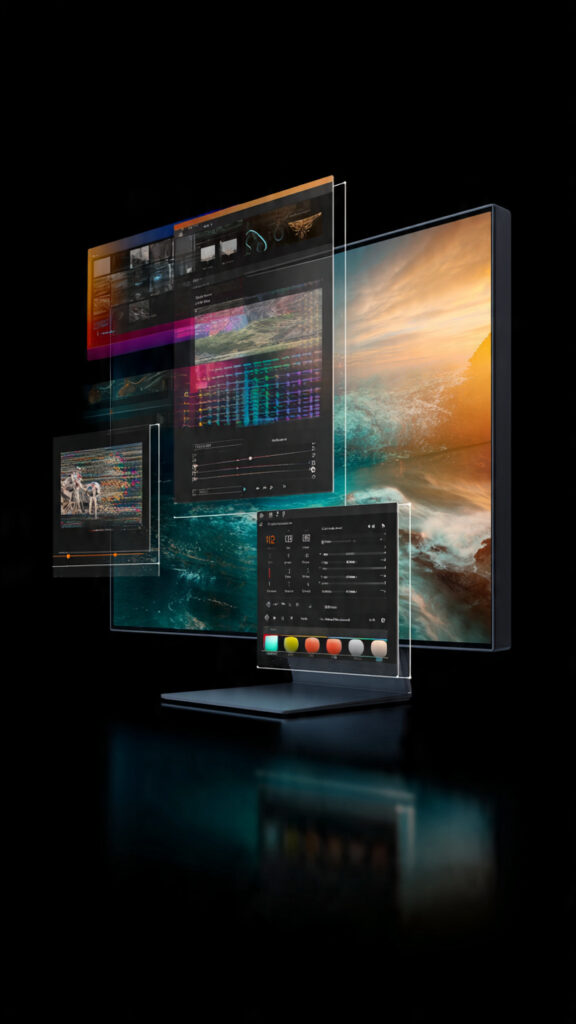
The Guide to Configuring Windows 11 HDR Settings for Color-Accurate Video Editing and Photo Work
The use of High Dynamic Range (HDR) displays, which provide a wider color gamut, deeper blacks, and brighter highlights than standard monitors, has become increasingly widespread in recent years. High dynamic range (HDR) has the potential to significantly enhance workflow fidelity for video editors and photographers by enabling more precise adjustments to be made for shadows and highlights. However, merely activating high dynamic range (HDR) on Windows 11 does not ensure that colors are accurate. It is possible for high dynamic range (HDR) to appear oversaturated, washed out, or inconsistent across applications if it is not properly configured. Having a solid understanding of the HDR settings, calibration tools, and application-specific workflows available in Windows 11 is absolutely necessary in order to guarantee color accuracy when working on professional creative projects.
Learning How High Dynamic Range (HDR) Works in Windows 11
HDR expands the range of colors and luminance that your display is capable of displaying, making it possible to see details in both bright and dark areas that are not able to be reproduced by standard dynamic range (SDR). By translating high dynamic range (HDR) content and balancing SDR applications on the same display, Windows 11 acts as an intermediary between your graphics processing unit (GPU), monitor, and creative applications. An inaccurate output can be the result of settings that have been misconfigured or hardware that is incompatible, making it difficult to judge exposure or color grading effectively. It is essential to have a solid understanding of both the HDR management at the system level and the application-level controls in order to achieve reliable results.
Compatibility of the Display with High Dynamic Range
HDR is not fully supported by all monitors, and even displays that are capable of HDR have varying degrees of performance. Go to Settings > System > Display and look for the phrase “HDR capable” under the monitor information. This will allow you to verify that the monitor is compatible. HDR quality is also affected by the refresh rate, bit depth, and color gamut of the image. Ensure that your display is capable of supporting wide color gamuts and at least 10-bit color for video editing. These standards are essential for achieving accurate highlights and subtle color transitions, so it is important to make sure that your display supports these standards. When you use hardware that is not supported, you might experience colors that are washed out, banding, or inconsistent luminance.
HDR support in Windows 11 is enabled.
After it has been determined that the two are compatible, HDR must be enabled in Windows. The “Use HDR” option can be activated by going to Settings > System > Display > HDR and WCG (Wide Color Gamut) and then toggling the switch. Adjustments for brightness and contrast may be prompted by Windows; ensuring that these steps are followed ensures that both SDR and HDR content are displayed in a balanced manner on the display. In order to ensure that your graphics hardware is able to process HDR content accurately, it is also essential to enable high dynamic range (HDR) in the control panel of your GPU. Activation done correctly is the first step toward establishing a dependable HDR workflow.
Brightness and SDR Compensation Configuration for High Dynamic Range
With Windows 11, you can adjust the brightness of HDR content and SDR content using separate sliders. On the other hand, SDR compensation ensures that SDR applications continue to be visible and have the appropriate tone on the same screen. HDR brightness is responsible for controlling the peak luminance of HDR content. The settings on these sliders should be adjusted according to the ambient lighting and the output that is desired for creative work. It is possible for highlights to be exaggerated when HDR peaks are excessively bright, and incorrect SDR compensation can cause standard content to appear dim or washed out completely. It is absolutely necessary to carefully calibrate these settings in order to ensure reliable previewing and editing.
Changing the settings of the GPU to achieve HDR accuracy
The settings of the graphics processing unit (GPU) are extremely important for HDR output, particularly for creative applications such as Adobe Premiere, Photoshop, or DaVinci Resolve. Make sure that the graphics processing unit (GPU) drivers are up to date and that high dynamic range (HDR) output, 10-bit color, and wide gamut rendering are all enabled. Some graphics processing units (GPUs) provide HDR management on a per-application basis, which enables professional software to circumvent Windows’ SDR/HDR adjustments. By utilizing these options, you can ensure that your editing applications will receive HDR signals that have not been altered, thereby maintaining the accuracy of the color and saturation levels.
Adjusting Your Monitor to Accommodate High Dynamic Range
In order to achieve accurate color grading and photo editing, hardware calibration is absolutely necessary. To determine the luminance, gamma, and color accuracy of an HDR display, you can make use of software applications such as X-Rite i1Display Pro or Datacolor SpyderX. When you calibrate your monitor, the internal look-up table (LUT) is adjusted so that your high dynamic range (HDR) content appears in a manner that is consistent with reference standards. Without calibration, even displays that are capable of high dynamic range (HDR) can produce highlights that are exaggerated, shadows that are clipped, or color reproduction that is inaccurate, which can disrupt professional workflows.
Color Profile Management in High Dynamic Range Workflows
Both SDR and HDR content can be managed using ICC profiles and color management, which are both supported by Windows 11. Make sure that the capabilities of the monitor and the color space you intend to use are compatible with your display profile. Applications such as Photoshop and Premiere give you the ability to match HDR output by selecting project-specific color spaces such as Rec.709, Rec.2020, or DCI-P3. Your edits will be accurately translated to client displays or final renders if you use color profiles that are consistent across the system and applications. This will prevent any unintended modifications from occurring.
Improvements Made to HDR Content Within Editing Software
Different creative applications have different approaches to HDR. In order to ensure that the project settings are compatible with HDR display capabilities, video editors need to make sure that they use the appropriate bit depth and color space. The use of 32-bit or 16-bit workflows is recommended for photographers who work with HDR images in order to preserve the fidelity of the highlights and shadows. In order to ensure that the exposure, contrast, and color grading of the content are accurate, it is important to preview the content on high dynamic range (HDR) monitors with the appropriate settings for both Windows and the graphics processing unit (GPU).
Managing SDR Content Within the Context of an HDR Environment
Displays that are enabled with HDR have the potential to display SDR content incorrectly if Windows and applications are not configured correctly. Enable SDR content compensation in Windows, and check to see that your editing applications display SDR in an accurate manner. For example, when comparing legacy images with HDR content or when mixing SDR and HDR footage in a timeline, this is an extremely important consideration. It is the responsibility of the manager to ensure that the SDR elements maintain their visual consistency without appearing muted or overexposed.
Troubleshooting the Most Frequent HDR Problems
In high dynamic range (HDR), some of the most common issues include flickering, washed-out blacks, oversaturation, and inconsistent color values across applications. It is possible for these to occur as a consequence of incompatible cables (HDMI versus DisplayPort), outdated GPU drivers, incorrect Windows HDR toggles, or monitor limitations. The majority of problems can be fixed by performing systematic troubleshooting, which includes updating drivers, testing alternative connections, and adjusting HDR/SDR settings. For creative work, having a consistent HDR performance requires having an understanding of how each component interacts with the others.
Making Presets Available for HDR Workflows That Are Consistent
Whenever you have finished optimizing your HDR settings, you should save them as presets in both Windows and the editing applications you use. The ability to switch between SDR and HDR workflows in a short amount of time or to maintain consistent setups across multiple projects is made possible by this. Maintaining presets cuts down on the amount of time needed for setup, eliminates the possibility of making accidental configuration errors, and guarantees consistent color accuracy across all editing sessions.
Utilizing Tools for External Calibration and LUT Correction
Application of consistent color grading across HDR and SDR content can be accomplished through the utilization of external LUTs or calibration software for advanced workflows. There is a reference framework that is provided by LUTs, which guarantees that the final outputs will conform to the desired standards for brightness, contrast, and color grading. In order to bridge the gap between HDR adjustments made at the system level and those made at the application level, combining LUTs with Windows HDR calibration creates an environment that is suitable for professional-level work in the fields of video and photography.
Over the course of time, preserving HDR accuracy
Over time, displays can drift, which can have an impact on the HDR accuracy. Regular recalibration, monitoring of Windows and GPU updates, and checking of color profiles are all essential components in order to maintain consistent high dynamic range (HDR) resolution. In order to ensure that system-level HDR adjustments do not inadvertently alter visual output, it is important to keep track of updates. This will ensure that the integrity of your creative work is preserved for many years to come.
The Reasons Why HDR Mastery Is Important for Professionals
Learning how to use high dynamic range (HDR) on Windows 11 ensures that the output you see on the screen is an accurate representation of the final product for content creators, photographers, and video editors. In addition to reducing the amount of guesswork involved, proper configuration also improves efficiency and ensures that colors, shadows, and highlights are maintained consistently across all devices. The ability to master high dynamic range (HDR) transforms a capable monitor into a reference tool of professional quality for high-end creative workflows.
Including High Dynamic Range (HDR) in the Post-Production Process
In Windows 11, having a dependable HDR setup ensures that your workflow, beginning with raw capture and continuing through editing, grading, and final export, is accurate and consistently predictable. A holistic approach to high dynamic range (HDR) can be created by having an understanding of system-level controls, GPU settings, application configuration, and calibration practices. This allows for precise creative decisions to be made. This integration from beginning to end is essential for delivering professional results, whether they are for client projects, content for the internet, or work in the film industry.
Why It Is Not Possible to Ignore the HDR Settings in Windows 11
In the absence of proper configuration, high dynamic range (HDR) displays have the potential to mislead rather than assist, resulting in inaccurate previews that influence decisions regarding color grading and exposure. Creators are able to achieve a more accurate representation of their content by methodically adjusting the settings for Windows 11 High Dynamic Range (HDR), calibrating the hardware, and managing the workflows of the applications. It is essential to have this level of precision when working in a professional setting, where color accuracy, dynamic range, and tonal fidelity are standards that cannot be compromised.